Cute Boy Going to School and Bring Books: A Design Resource Evaluation
In the realm of digital illustration, specific character archetypes serve as foundational elements for a wide array of creative projects. The Cute Boy Going to School and Bring Books concept is one such archetype, frequently utilized in educational branding, children's apparel, and stationery design. This particular vector illustration, often categorized under people education icons, represents more than just a visual of a student; it encapsulates themes of learning, curiosity, and academic readiness through a flat cartoon style. For designers, educators, and product creators aged 20 to 50, understanding the utility, format versatility, and comparative advantages of this specific asset is crucial for making informed procurement decisions.
Defining the Visual Identity and Distinctive Features
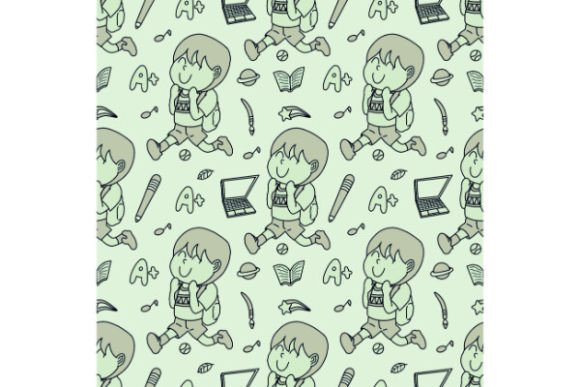
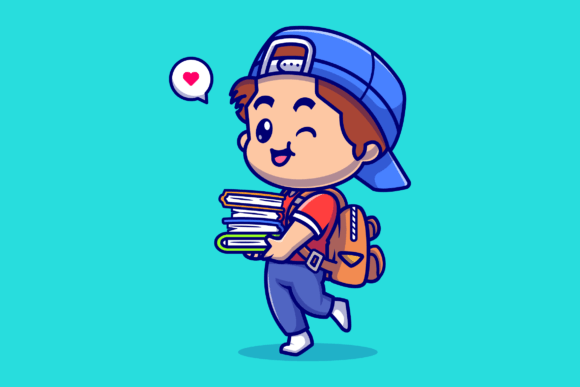
The core appeal of the Cute Boy Going to School and Bring Books illustration lies in its adherence to the flat cartoon aesthetic. Unlike realistic renderings or complex 3D models, this style prioritizes clean lines, solid color blocks, and simplified geometry. This approach ensures that the subject remains legible even at small scales, a critical factor when the image is applied to merchandise like stickers, mugs, or business cards. The depiction typically features a young boy carrying a stack of books, immediately signaling an educational context without requiring additional textual explanation.
What distinguishes this specific resource from generic clip art is its premium construction. As a well-organized vector file, it offers structural integrity that raster images cannot match. The layers are separated logically, allowing for granular control over individual elements such as the boy's clothing, the books, or the background. This modularity is essential for professionals who need to adapt the image to fit specific brand guidelines or color palettes. The inclusion of a transparent background further enhances its utility, enabling seamless integration into existing layouts without the need for time-consuming masking or erasing processes.
Comparing Vector Formats Against Raster Alternatives
When evaluating resources for commercial design, the choice between vector and raster formats is often the primary decision point. The Cute Boy Going to School and Bring Books asset is provided in multiple vector formats, including AI (Adobe Illustrator) and EPS (Encapsulated PostScript), alongside scalable SVG files. These formats offer distinct advantages over standard JPEG or PNG raster images, particularly regarding scalability.
Raster images, composed of pixels, suffer from degradation when enlarged. If a designer attempts to use a low-resolution PNG of a schoolboy for a large-format poster or a billboard, the result will be pixelated and unprofessional. In contrast, the vector nature of this illustration ensures that the image can be scaled infinitely without any loss of quality. Whether the design requires a tiny icon for a mobile app or a massive print run for t-shirts, the crispness of the lines remains consistent. While high-resolution JPEGs are included in the package for immediate preview or web use, the true value lies in the editable source files that future-proof the design against changing size requirements.
Format Flexibility and Workflow Integration
Beyond the technical superiority of vectors, the variety of file formats included—AI, EPS, JPEG, PNG, and SVG—addresses different stages of the production workflow. Professional designers working within the Adobe ecosystem will find the AI file indispensable for detailed editing. It allows for direct manipulation of anchor points, path adjustments, and color swatch modifications. For those using alternative software or web developers, the SVG and EPS files provide compatibility with open-source tools and browser-based rendering environments.
This multi-format delivery contrasts sharply with many free stock image sites that offer only a single compressed JPG. By providing a comprehensive suite of files, this resource reduces friction in the design process. There is no need to convert formats or risk quality loss during export. The ready-to-use nature of these files means that a project timeline can be significantly shortened, allowing creators to focus on composition and layout rather than technical troubleshooting.
Evaluating Use Cases and Commercial Applications
The versatility of the Cute Boy Going to School and Bring Books illustration makes it suitable for a broad spectrum of applications, yet it excels in specific niches. Its friendly, non-threatening aesthetic is particularly effective in the education sector. Schools, tutoring centers, and online learning platforms can utilize this icon to create a welcoming atmosphere for students and parents. The imagery reinforces the positive aspects of schooling, making it ideal for back-to-school campaigns, classroom decorations, or educational app interfaces.
For product manufacturers, the flat style translates exceptionally well to merchandise. The simplicity of the design ensures that colors print accurately on various substrates, from cotton fabric for shirts to ceramic for mugs. When designing stickers or greeting cards, the clear outlines prevent bleeding during the cutting process, a common issue with overly detailed illustrations. Furthermore, the ability to easily edit colors allows brands to customize the boy's attire or the book covers to match their specific corporate identity, creating a cohesive visual language across different products.
Tradeoffs and Limitations of the Flat Cartoon Style
While the flat cartoon style offers significant benefits, it is not universally applicable. Prospective users must consider whether this aesthetic aligns with their brand voice. The Cute Boy Going to School and Bring Books illustration conveys playfulness and approachability, which may clash with institutions aiming for a strictly formal, serious, or luxury image. For example, a prestigious university or a high-end academic consultancy might find this style too juvenile for their marketing materials.
Additionally, while the vector format allows for color changes, the underlying shape and pose are fixed. If a project requires a dynamic action shot, a specific cultural representation not covered by the current design, or a highly detailed realistic portrait, this icon will not suffice. It serves best as a symbolic element rather than a focal point requiring deep narrative detail. Users seeking hyper-realism or complex shading techniques will need to look toward other artistic styles, such as digital painting or 3D rendering.
Decision Factors for Selecting This Resource
Determining if the Cute Boy Going to School and Bring Books illustration is the right choice involves weighing specific project requirements against the asset's capabilities. The following factors should guide the decision-making process:
- Scalability Needs: If the design must appear in both micro (app icons) and macro (billboards) sizes, the vector format is non-negotiable. This resource meets that requirement perfectly.
- Customization Requirements: Projects requiring specific color matching benefit from the editable layers found in the AI and EPS files. If the design team needs to tweak the shirt color or the book spines, this flexibility is a major advantage.
- Aesthetic Alignment: The flat, cute style is ideal for youth-oriented, educational, or casual contexts. It is less suitable for formal corporate communications or luxury branding.
- Production Speed: For tight deadlines, the "ready-to-use" nature of the file saves hours of creation time compared to commissioning a custom illustration or drawing from scratch.
Strategic Alternatives and Complementary Resources
While this illustration is robust, it may need to be part of a larger collection. Designers often require a set of characters to tell a story or represent diversity. If the project demands a classroom scene with multiple students, teachers, or different ethnic representations, a single icon of a boy with books may feel isolated. In such cases, this asset should be viewed as a building block to be combined with similar vector sets that share the same line weight, color palette, and stylistic consistency.
Alternatively, if the budget allows for unique customization beyond color changes, commissioning a bespoke illustration might be preferable. Custom work can capture specific nuances of a brand's personality that pre-made assets cannot. However, for most standard applications where speed, cost-effectiveness, and quality are balanced, the premium vector nature of the Cute Boy Going to School and Bring Books provides an optimal solution. It bridges the gap between generic clip art and expensive custom commissions, offering professional-grade results that are accessible and adaptable.
Ultimately, the value of this resource lies in its balance of simplicity and functionality. It removes technical barriers for designers while providing the high-quality output required for commercial products. By understanding its strengths in scalability and editability, alongside its limitations in stylistic range, professionals can effectively integrate this illustration into their workflows, ensuring that their final designs communicate clarity, warmth, and professionalism.