Female Teacher and Kids Walking Outdoors: A Guide to Outdoor Pedagogy
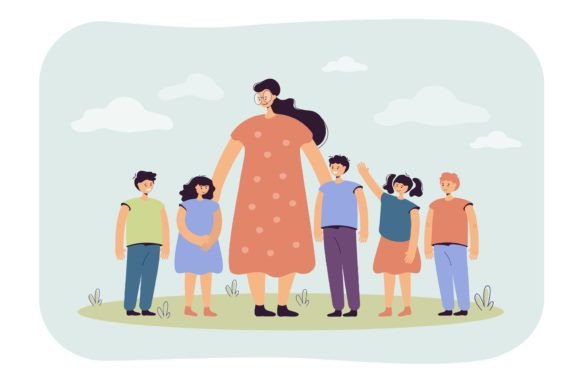
The image of a Female Teacher and Kids Walking Outdoors is more than just a charming vector illustration or a stock photo for an educational brochure. It represents a fundamental shift in modern pedagogy, moving learning from the four walls of a classroom into the dynamic, unpredictable environment of nature. When a woman watches a group of school children on grass, she is not merely supervising; she is facilitating a unique type of experiential learning that addresses developmental needs often overlooked in traditional settings. This article explores the practical applications, challenges, and transformative outcomes of integrating outdoor walking and exploration into daily educational routines.
Defining the Concept of Outdoor Learning
At its core, the concept of a Female Teacher and Kids Walking Outdoors embodies the philosophy of outdoor education. It is an approach where the natural environment serves as the primary classroom. Unlike structured recess or organized sports, this method involves guided movement, observation, and inquiry. The teacher acts as a facilitator rather than a lecturer, encouraging students to engage with their surroundings through sensory experiences.
This pedagogical strategy is rooted in the understanding that children learn best when they are active, curious, and connected to the physical world. Whether in a daycare setting or a formal school curriculum, taking students outdoors allows for a holistic development of cognitive, social, and emotional skills. The visual of a teacher guiding a line of children across a grassy field symbolizes the journey of discovery, where every step offers a new lesson in biology, geography, physics, or simply the joy of movement.
Addressing Modern Educational Challenges
Today's educators face significant challenges, including rising levels of childhood sedentary behavior, attention deficits, and anxiety among young learners. Traditional indoor classrooms, while necessary for focused instruction, can sometimes feel restrictive and overstimulating in negative ways. The need for fresh air, unstructured movement, and a change of scenery has never been greater.
The situation of a Female Teacher and Kids Walking Outdoors directly addresses these issues. By stepping outside, teachers can mitigate the effects of "nature deficit disorder," a term coined to describe the consequences of children spending less time in nature. The open space provides a mental reset, lowering cortisol levels and improving focus upon returning to academic tasks. Furthermore, the outdoor environment reduces the pressure of rigid seating arrangements, allowing children with different learning styles to thrive without the stigma of not fitting into a desk-bound routine.
Practical Applications and Implementation
Implementing outdoor learning does not require a massive overhaul of the curriculum. It begins with small, manageable steps. Educators can start by incorporating short walking sessions into the daily schedule. These walks serve multiple purposes: they act as transitions between subjects, provide opportunities for physical activity, and offer a platform for informal assessment.
- Sensory Exploration: Encourage children to notice textures, sounds, and smells. A simple walk can become a lesson in botany as students identify leaves or insects.
- Narrative Development: Use the walk as inspiration for storytelling. Children can create stories about the characters they imagine living in the trees or under the grass.
- Mathematical Concepts: Count steps, estimate distances, or measure the height of objects using body parts as units of measurement.
- Social-Emotional Learning: Walking side-by-side often facilitates deeper conversations than sitting face-to-face. It creates a relaxed atmosphere for discussing feelings and resolving conflicts.
When a woman watching a group of school children on grass, she is observing these interactions in real-time. She can intervene to guide a discussion, ensure safety, or encourage a shy student to participate. The key is to maintain a balance between freedom and structure, allowing children to explore while ensuring they remain within a safe boundary.
Outcomes and Benefits for Students
The outcomes of regularly engaging in outdoor activities like walking are profound. Research consistently shows that time spent in nature improves concentration, memory, and overall academic performance. Physically, it combats obesity and promotes motor skill development. Psychologically, it fosters a sense of well-being and resilience.
Moreover, the presence of a supportive adult, such as a female teacher, reinforces the feeling of security needed for children to take risks and explore independently. This relationship building is crucial. In the outdoors, the power dynamic shifts slightly; the teacher becomes a co-explorer. This shared experience strengthens the bond between educator and student, creating a foundation of trust that enhances all future learning interactions.
Different Approaches for Different Users
Not every educational setting is the same, and the application of outdoor learning should be tailored to specific needs. For daycare providers, the focus might be on gross motor skills and basic sensory play. A caregiver leading toddlers on a walk will prioritize safety and simple observations like "look at the big tree" or "feel the soft grass."
In contrast, elementary school teachers might use the Female Teacher and Kids Walking Outdoors model for more complex projects. They could integrate science experiments, map reading, or environmental stewardship initiatives. High school educators might utilize outdoor walks for reflective journaling, poetry writing, or discussions on ecology and climate change. The flexibility of this approach ensures that it remains relevant and effective across various age groups and educational stages.
Overcoming Barriers to Success
Despite the clear benefits, barriers exist. Weather concerns, liability fears, and curriculum pressures often keep teachers indoors. To overcome these, schools must develop clear policies regarding outdoor activities. Simple measures like having weather-appropriate clothing available and establishing clear boundaries can alleviate safety concerns.
Curriculum integration is another hurdle. Teachers may worry that time spent walking detracts from "real" learning. However, reframing the walk as an essential part of the learning process rather than a break from it changes this perspective. By aligning outdoor activities with learning objectives, educators can demonstrate that the grass and sky are valid teaching tools.
Recommendations for Educators
To successfully implement this approach, consider the following recommendations:
- Start Small: Begin with 10-minute walks and gradually increase the duration as confidence grows.
- Prepare the Environment: Ensure the area is safe, free of hazards, and interesting enough to spark curiosity.
- Plan Loosely: Have a general goal in mind but be ready to follow the children's interests if they discover something unexpected.
- Document the Experience: Take photos or have students draw what they see to share with parents and colleagues, reinforcing the value of the activity.
- Collaborate: Share ideas with other teachers to build a community of practice around outdoor education.
Ultimately, the image of a Female Teacher and Kids Walking Outdoors is a powerful reminder of the potential that lies beyond the classroom door. It represents a commitment to holistic education that values the whole child—mind, body, and spirit. By embracing the outdoors, educators can unlock new avenues for learning, foster a love for nature, and create lasting memories that enrich the lives of their students. As we move forward, let us view the grassy fields and open paths not as distractions, but as essential partners in the journey of education.