Guiding the Next Generation: The Power of Storytelling in Traffic Safety Education
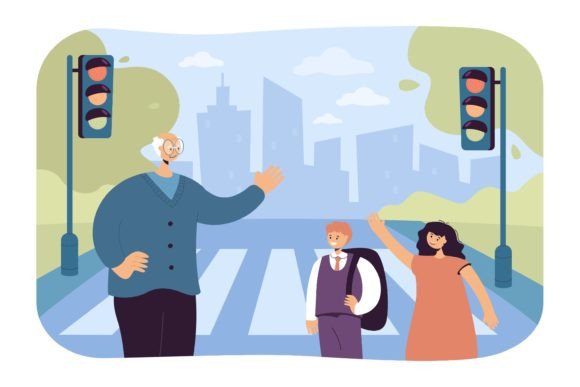
In the bustling rhythm of modern life, where digital distractions often compete for our attention, there is a profound value in returning to the basics of human connection. One of the most effective ways to teach critical life skills, such as road safety, is through the figure of a trusted elder—a grandfather or a wise teacher. This dynamic is beautifully captured in engaging flat vector illustrations that depict an experienced man instructing children near a crosswalk. These visuals are not merely decorative; they encapsulate a timeless lesson on road safety that resonates across all age groups, blending warmth with urgent practical advice.
This article explores the significance of this educational approach, examining how the archetype of the caring elder serves as a powerful vehicle for teaching traffic safety measures. We will delve into the psychology behind these interactions, the role of visual storytelling in education, and the practical steps every child should learn from such mentors.
The Archetype of the Wise Mentor in Modern Education
When we visualize safety education, we often imagine stern signs or flashing lights. However, the most enduring lessons come from people. The image of an elderly man—perhaps a grandfather with silver hair and a kind smile, or a dedicated teacher with years of experience—speaks volumes about authority tempered with care. In the context of traffic safety, this figure represents stability and wisdom in a chaotic environment.
Why does this specific character resonate so deeply? It is because children naturally look to older generations for guidance. A grandfather figure embodies patience and the accumulation of life experience. When he stands at a crosswalk, pointing out the nuances of a traffic signal or explaining the importance of looking both ways, he is not just reciting rules; he is sharing a survival skill passed down through generations. This emotional connection makes the information stick far better than a dry lecture ever could.
Bridging Generations Through Shared Responsibility
The interaction between an elder and a child at a busy intersection is a microcosm of community responsibility. It highlights the collective effort required to keep our streets safe. In modern society, where parents are often occupied with work and technology, figures like teachers and grandparents play an increasingly vital role in filling the educational gaps. They provide the personal touch that automated systems cannot replicate.
Consider the scenario depicted in many contemporary flat vector designs: a group of children, eyes wide with curiosity, listening intently to an elder who uses hand gestures to explain the flow of traffic. This scene is more than just a moment of instruction; it is a transfer of trust. The elder teaches the children that their safety is paramount, and in doing so, empowers them to navigate the world with confidence.
Decoding the Visual Language of Safety Illustrations
In the realm of web design and educational materials, the way information is presented is just as important as the information itself. The use of flat vector illustration has become a standard for conveying complex ideas simply and effectively. These graphics strip away unnecessary details, focusing the viewer's attention on the core message: the interaction between the mentor and the students.
Let us break down why these specific illustrations are so effective for banners, websites, and educational posters:
- Clarity and Focus: Flat design removes shadows and gradients that can distract the eye. This ensures that the action—the elder pointing, the children stopping—is immediately understood.
- Emotional Warmth: Despite being stylized, these illustrations use color palettes that evoke warmth and friendliness. Soft oranges, calming blues, and vibrant greens create an inviting atmosphere, reducing the fear often associated with danger.
- Universal Appeal: By avoiding hyper-realistic details that might date the image or alienate certain demographics, flat vectors remain timeless. They appeal to children, parents, and policymakers alike.
When you integrate such an illustration into a website or a school banner, you are creating a visual anchor. It signals to the audience that the content following it is trustworthy, educational, and designed with their well-being in mind. The "well-laid-out graphic" mentioned in design briefs is not an accident; it is a strategic choice to maximize engagement and retention.
Core Traffic Safety Measures Taught by Mentors
What exactly is being taught in these captivating scenes? While the illustration captures a single moment, the conversation likely covers a comprehensive range of safety protocols. An experienced instructor knows that road safety is not just about one rule, but a series of habits.
1. The Art of Observation
The first lesson is always observation. Before stepping onto the street, a child must learn to scan the environment. The elder teaches them to look left, right, and then left again. This simple mantra is the foundation of pedestrian safety. It instills a habit of situational awareness that protects them from vehicles that may be speeding or distracted.
2. Understanding Signals and Signs
Traffic lights and signs are the language of the road. A grandfather or teacher explains the meaning of red, yellow, and green, but also goes deeper. They discuss what to do when a light is malfunctioning or when a car runs a red light. They emphasize that signals are guidelines, but caution is the rule.
3. The Importance of Designated Crossings
Why cross at a crosswalk? Because drivers expect pedestrians there. The mentor explains that jaywalking increases risk significantly. By using designated crossings, children become visible and predictable, two key factors in preventing accidents.
4. Making Eye Contact
A crucial, yet often overlooked, tip is making eye contact with drivers before crossing. The elder demonstrates this by showing the children how to wait until a driver acknowledges their presence. This ensures that the driver sees them, rather than assuming they are invisible.
Common Misunderstandings About Road Safety
Even with good intentions, there are misconceptions that can undermine safety efforts. It is essential to clarify these assumptions to ensure the lessons are accurate and effective.
- Misconception: "If I'm small, drivers won't see me."
Reality: While smaller stature can make visibility harder, wearing bright colors and using reflective gear (as often suggested by these mentors) drastically improves visibility. The lesson isn't to hide; it's to shine. - Misconception: "The green light means I have absolute right of way."
Reality: Even with a green light, pedestrians must verify that cars have actually stopped. Drivers can be distracted or negligent. The mentor teaches that the green light is a permission to proceed after confirming safety. - Misconception: "Safety education is only for young children."
Reality: As seen in the timeless nature of these illustrations, road safety is a lifelong learning process. Teenagers and adults also benefit from refreshing their knowledge, especially with the rise of new transportation technologies like e-scooters and autonomous vehicles.
Integrating Safety Lessons into Modern Life and Technology
How does this traditional form of education fit into our high-tech world? Surprisingly, it fits perfectly. While we have apps, GPS, and smart sensors, the human element remains irreplaceable. Schools and businesses are increasingly using digital platforms to disseminate these lessons, often utilizing the very vector art described earlier to grab attention on social media or educational portals.
In the workplace, companies are adopting similar mentorship models for safety training. Just as a grandfather guides a child, senior employees guide newcomers through the hazards of industrial sites or office environments. The principle remains the same: experience shared is risk reduced.
Furthermore, technology can amplify these messages. Interactive websites can feature animated versions of these flat vector characters, allowing children to simulate crossing the street in a virtual environment. However, the core curriculum still relies on the wisdom of the elder figure. Technology provides the medium, but the human connection provides the meaning.
Building a Culture of Safety Through Community
Ultimately, the goal of these educational efforts is to build a culture where safety is a shared value. When a community sees elders actively engaging with children about traffic rules, it reinforces the idea that everyone has a role to play. Parents feel reassured, teachers feel supported, and children feel protected.
The depiction of an elderly man dynamically communicating with children near a crosswalk is more than a design choice; it is a call to action. It reminds us that safety is not a passive state but an active practice. It requires vigilance, communication, and the willingness to pass on knowledge to the next generation.
As we move forward, let us embrace these timeless lessons. Whether through a warm conversation on a sidewalk corner or a compelling graphic on a website, the message is clear: prioritize safety, respect the road, and look out for one another. By combining the wisdom of the past with the tools of the present, we can create safer streets for everyone.
Final Thoughts on Engagement and Impact
The power of this educational model lies in its ability to connect emotionally while delivering critical information. It transforms a potentially scary topic—traffic accidents—into a manageable, learnable skill set. By leveraging the trust inherent in the grandfather or teacher figure, we ensure that the lessons of road safety are not just heard, but felt and remembered. This approach creates a legacy of safety that will protect communities for generations to come.