The Electronic School Diary: A Visual Narrative of Modern Education
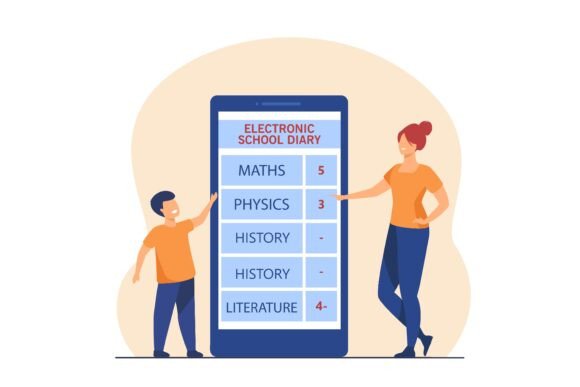
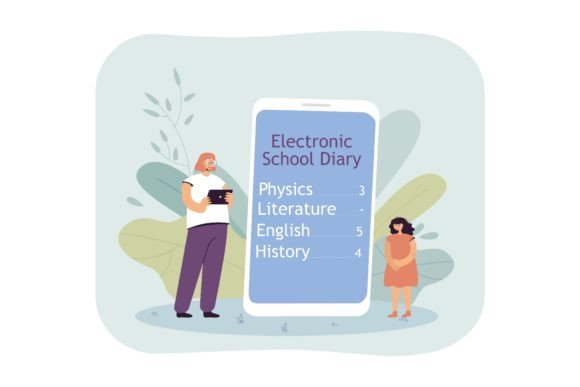
In the rapidly evolving landscape of digital pedagogy, few symbols capture the essence of contemporary learning quite like the Electronic School Diary Flat Vector Illu. This specific graphic representation does more than merely depict a device; it encapsulates a profound shift in how families, educators, and institutions interact with academic data. The image presents a striking visual metaphor: a mother and daughter leaning in close to examine a towering smartphone screen, which is alive with subjects, grades, and schedules. This intimate moment, rendered in sleek flat vector style, serves as a microcosm for the broader integration of technology into the fabric of daily school life.
As we move further away from the era of physical notebooks and paper report cards, the concept of the electronic diary has transitioned from a novelty to an essential utility. The illustration named Electronic School Diary Flat Vector Illu highlights this transition not through technical jargon, but through human connection. It suggests that the true power of educational technology lies not in the hardware itself, but in the collaborative engagement it fosters between parents and students. By analyzing the elements within this artwork, we can uncover deeper insights into the mechanics, benefits, and societal implications of digitizing the student experience.
Decoding the Visual Language of Digital Learning
The choice of a flat vector illustration style is significant in itself. In design theory, flat design strips away unnecessary ornamentation to focus on clarity and usability—principles that mirror the functionality of modern educational software. When we look at the Electronic School Diary Flat Vector Illu, the clean lines and vibrant colors reflect the user interface (UI) trends found in today's leading student information systems (SIS). There are no shadows or gradients to distract; the focus remains entirely on the content displayed on the screen.
The composition centers on the "towering" smartphone. While physically impossible for a phone to be larger than the people holding it, this artistic exaggeration symbolizes the overwhelming presence of digital platforms in our lives. For the mother and daughter depicted, the device is not just a communication tool; it is a portal to their academic reality. The screen displays a mosaic of subjects and grades, representing the comprehensive nature of these applications. Unlike a traditional diary that might only list dates, an electronic diary aggregates attendance, homework assignments, real-time grading, and teacher feedback into a single, accessible stream.
This visual narrative underscores a critical aspect of modern education: transparency. In the past, a student's progress was often hidden until the end of a term when a physical report card was sent home. Today, the dynamic display shown in the illustration allows for immediate visibility. Parents can see a failing grade in mathematics the moment it is entered by the teacher, allowing for timely intervention. The mother and daughter examining the screen together represent a proactive approach to learning, where data is shared openly and used to drive improvement rather than simply serving as a record of the past.
The Shift from Passive Observation to Active Engagement
The interaction captured in the Electronic School Diary Flat Vector Illu illustrates a fundamental change in parental involvement. Historically, parent-teacher conferences were the primary mechanism for discussing academic performance, occurring only once or twice a year. The digital diary transforms this sporadic interaction into a continuous dialogue. The image shows the mother not just watching, but participating. She is likely asking questions about the subjects listed, discussing strategies for improving the grades shown, or perhaps planning the schedule for the upcoming week.
This shift empowers parents to become active stakeholders in their child's education. When a parent sees a notification about a missing assignment on their own device, they can prompt their child immediately, fostering a sense of responsibility and accountability. Conversely, positive feedback displayed on the screen can be celebrated instantly, reinforcing good habits. The seamless flow of information ensures that the home environment becomes an extension of the classroom, creating a cohesive support system for the student.
Furthermore, the depiction of the daughter looking intently at the screen alongside her mother suggests a collaborative partnership. It moves away from the authoritarian model where parents dictate terms, toward a mentorship model where they guide and support. This aligns with educational research suggesting that students perform better when there is a strong, communicative link between home and school. The electronic diary acts as the bridge that makes this connection possible, turning abstract data into actionable conversations.
Functional Dynamics of the Digital Academic Record
Beyond the symbolic value, the practical application of an electronic school diary offers tangible advantages that reshape the administrative and pedagogical workflows of schools. The features hinted at in the illustration—subjects, grades, and schedules—are the core pillars of these digital ecosystems. Understanding how these components function provides a clearer picture of why such tools have become indispensable.
Real-Time Data Accessibility
One of the most significant benefits is the immediacy of information. In the illustration, the screen is "alive," implying constant updates. Teachers can input grades, attendance records, and behavioral notes directly from their tablets or laptops. This data is instantly synchronized across the network, making it available to students and parents via their smartphones or computers. This eliminates the lag time associated with paper-based systems, where errors could go unnoticed for weeks, and communication delays were common.
Centralized Information Management
The electronic diary consolidates disparate sources of information into a single platform. Instead of carrying a physical planner, checking email for announcements, and waiting for paper permission slips, everything is centralized. The "towering screen" in the artwork represents this hub of activity. It contains the curriculum map, the homework tracker, the library book status, and even cafeteria menus. This centralization reduces cognitive load for students and parents, allowing them to focus on the content rather than the logistics of managing it.
Customization and Personalization
Modern electronic diaries often include features for personalization, which the flat vector style of the illustration subtly supports through its clean, modular aesthetic. Students can view their specific timetables, while parents might see a dashboard tailored to their child's needs. Advanced systems can even provide analytics, showing trends in performance over time. If a student is consistently struggling with a particular subject, the system can highlight this pattern, prompting both the teacher and the parents to investigate further.
Implications for Educational Equity and Accessibility
While the Electronic School Diary Flat Vector Illu depicts a harmonious scene, the widespread adoption of such technology also raises important considerations regarding accessibility. The assumption that every family has access to a smartphone and reliable internet is becoming less valid in certain demographics. However, the trend is moving toward inclusive design, where these platforms are optimized for low-bandwidth environments and offer multi-language support.
For students with disabilities, electronic diaries can be transformative. Features such as text-to-speech, adjustable font sizes, and color-coded schedules can make the academic world more navigable for those who struggle with traditional print materials. The visual clarity of the illustration reflects this potential for inclusivity; the information is presented clearly and distinctly, ensuring that no user is left behind due to poor design.
Moreover, the digital nature of these records facilitates long-term data retention and portability. As students move between schools or progress through different levels of education, their academic history travels with them digitally. This continuity ensures that new teachers have immediate access to a student's background, learning styles, and past achievements, allowing for a more personalized and effective educational experience from day one.
The Role of Design in User Adoption
The success of any educational technology relies heavily on its user interface. The Electronic School Diary Flat Vector Illu serves as a prime example of how design influences perception and usage. Flat design, characterized by minimalism and bold typography, has become the standard for mobile applications because it is intuitive and easy to scan. In the context of a school diary, where users may need to find specific information quickly amidst a sea of data, this design philosophy is crucial.
When parents and students encounter a cluttered, confusing interface, they are likely to disengage. The sleekness of the illustration suggests a frictionless experience. Icons are recognizable, navigation is logical, and the hierarchy of information is clear. The "subjects and grades" are not buried in complex menus but are front and center, reflecting the priorities of the users. This attention to detail in design ensures that the technology serves as an enabler rather than a barrier.
Furthermore, the emotional resonance of the image cannot be overlooked. By depicting a warm, supportive interaction, the illustration frames the technology as a tool for connection rather than surveillance. This positive framing is essential for adoption. If parents view the electronic diary as a way to monitor and police their children, resistance will grow. However, if they see it as a means to collaborate and celebrate achievements—as the mother and daughter appear to be doing—the technology becomes a welcome addition to the family routine.
Future Trajectories in Educational Technology
Looking ahead, the evolution of the electronic school diary promises even greater integration with emerging technologies. Artificial intelligence (AI) could soon analyze the data displayed on those screens to predict academic risks before they materialize, offering personalized learning recommendations. Augmented reality (AR) might transform the static schedule into an interactive 3D roadmap of the school day. Yet, regardless of how advanced the technology becomes, the core principle illustrated in the Electronic School Diary Flat Vector Illu will remain unchanged: the importance of human connection.
Technology will continue to evolve, but the goal remains the same—to empower students, support parents, and assist educators in fostering a love for learning. The image of the mother and daughter standing together before the glowing screen is a timeless reminder that at the heart of every digital innovation is a human story. It is a story of growth, understanding, and the shared commitment to academic excellence.
As we embrace this digital paradigm, it is vital to remember that the tools we use are only as effective as the relationships they facilitate. The Electronic School Diary Flat Vector Illu captures this balance perfectly, offering a glimpse into a future where technology and education blend seamlessly to create opportunities for all. Whether you are an educator designing curricula, a parent navigating your child's schooling, or a developer building the next generation of educational apps, this visual narrative serves as a guiding star for what matters most in the journey of learning.